Wilcox Seeks to Provide Relief for Working Families
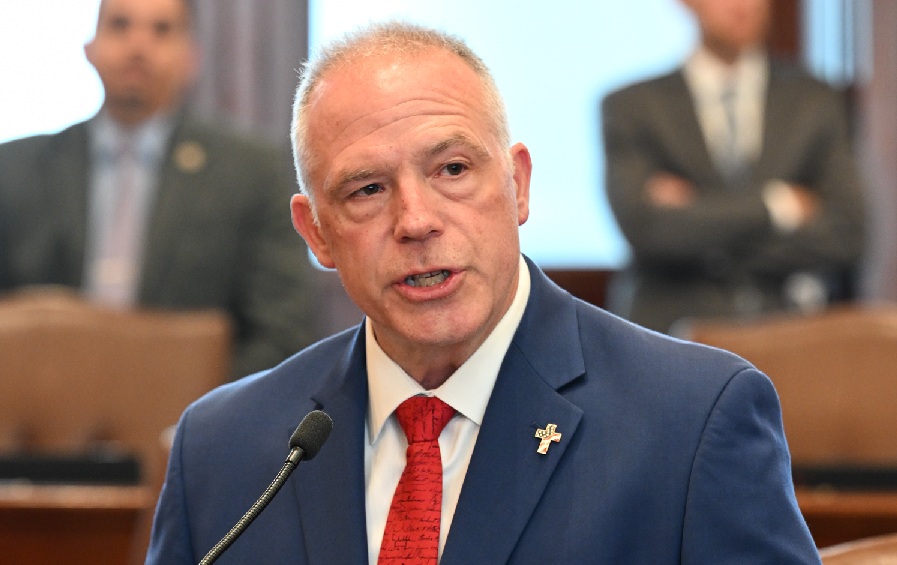
Working families face expenses throughout their daily lives, from filling up the gas tank and paying for childcare to covering healthcare costs and purchasing everyday necessities.
My Senate Republican colleagues and I are advancing a series of proposals aimed at addressing several of those costs while also allowing workers to keep more of the money they earn. I am a co-sponsor of all bills in the package.
One proposal focuses on the cost of getting to work and transporting a family. Senate Bill 4205 would reduce the state sales tax rate applied to motor fuel and gasohol to 1.25 percent.
Other measures focus on everyday necessities and healthcare. Senate Bill 3869 would exempt diapers for infants, children, and adults from state sales taxes, while Senate Bill 3851 would provide sales tax exemptions for prescription medicines and certain prescribed medical devices used for cancer treatment.
Childcare is another focus of the affordability proposals. Senate Bills 3785, 3783, 3788, and 3784 take several approaches to providing tax relief and encouraging greater access to childcare, including tax credits for families and incentives connected to employer-provided childcare.
The package also includes proposals aimed at healthcare and health insurance costs. Senate Bills 2763 and 4214 (will be read into the record during veto session) would create state income tax deductions for health insurance premiums.
Finally, the package includes proposals that allow workers to keep more of their hard-earned money. Senate Bill 3792 would create a state income tax deduction for gratuities included in federal adjusted gross income, while Senate Bill 3175 would create a deduction for overtime wages.
Working families experience the squeeze on their wallets throughout their daily lives, including when they drive to work, arrange childcare, pay for healthcare, and purchase necessities for their families. They should be able to see the benefits of their hard work in their own bank accounts, and the goal of the proposals is to provide relief where families feel financial pressure most.
Wilcox to Co-Host Senior Expo in Crystal Lake
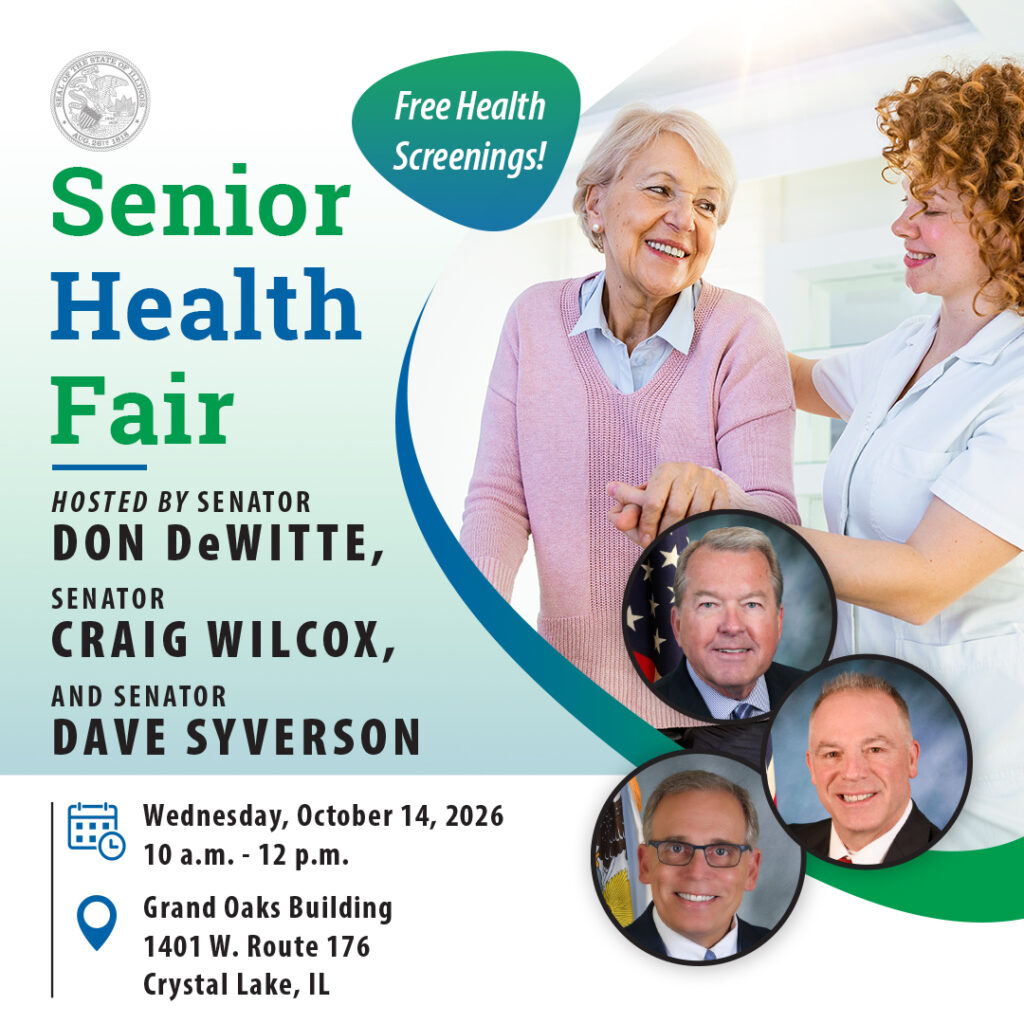
On Wednesday, October 14, I am partnering with two of my Senate Republican colleagues for a comprehensive Senior Expo in Crystal Lake. This event will feature dozens of groups that cater to the needs of seniors.
Crystal Lake Senior Expo
Wednesday, October 14
10:00 AM – 12:00 Noon
Grand Oaks Building
1401 W. Route 176
Crystal Lake, IL
If you are a senior, a caretaker, or a family member of a senior, I hope you’ll come out to this comprehensive event!
In addition to more than 30 informational booths, attendees will have access to a variety of free services and resources, including:
- I-PASS on Demand assistance through the Illinois Tollway
- ICASH/Unclaimed Property assistance through the Illinois State Treasurer’s Office
- Senior transportation information from PACE and the Northern Illinois Transportation Agency (NITA)
- Veteran Information
- Optional vaccinations provided by Walgreens
- Utility assistance and energy efficiency program information
- Health and wellness resources from local health care providers
- Home health and senior living information
Wilcox Renews Call for Illinois to Join Federal Scholarship Program
With a new federal scholarship program scheduled to begin January 1, 2027, I am renewing my call for Illinois to participate and provide families with access to additional educational opportunities.
The Federal Scholarship Tax Credit program creates a federal tax credit of up to $1,700 for qualifying private contributions to scholarship granting organizations. Those organizations can then provide scholarships to eligible students for qualified elementary and secondary education expenses.
Participation by individual states is voluntary. According to the Internal Revenue Service, 30 states have formally made advance elections to participate in the program for 2027 as of September 14. Illinois is not currently among them.
The federal program does not take money out of existing Illinois public school appropriations. Instead, scholarships are supported through private contributions incentivized by the new federal tax credit. Participating in the program and continuing to support Illinois public schools are not mutually exclusive.
Senate Republicans have introduced legislation to ensure Illinois participates. Senate Bill 3850, for which I serve as a co-sponsor, would require the Governor, by January 1, 2027, and annually thereafter, to submit the required list of scholarship-granting organizations to the federal government.
Under current federal guidance, participating states must provide the IRS with a list of qualifying scholarship-granting organizations. For 2027, the IRS says that list must be provided by January 1, 2027, or as early as practicable.
Illinois should not wait until the last minute to provide families with certainty. Thirty states have already chosen to move forward, and Illinois should do the same so families have access to another tool that could help children receive the educational opportunities and resources they need to succeed.
Five Years After CEJA, Wilcox Warns Energy Challenges Are Growing
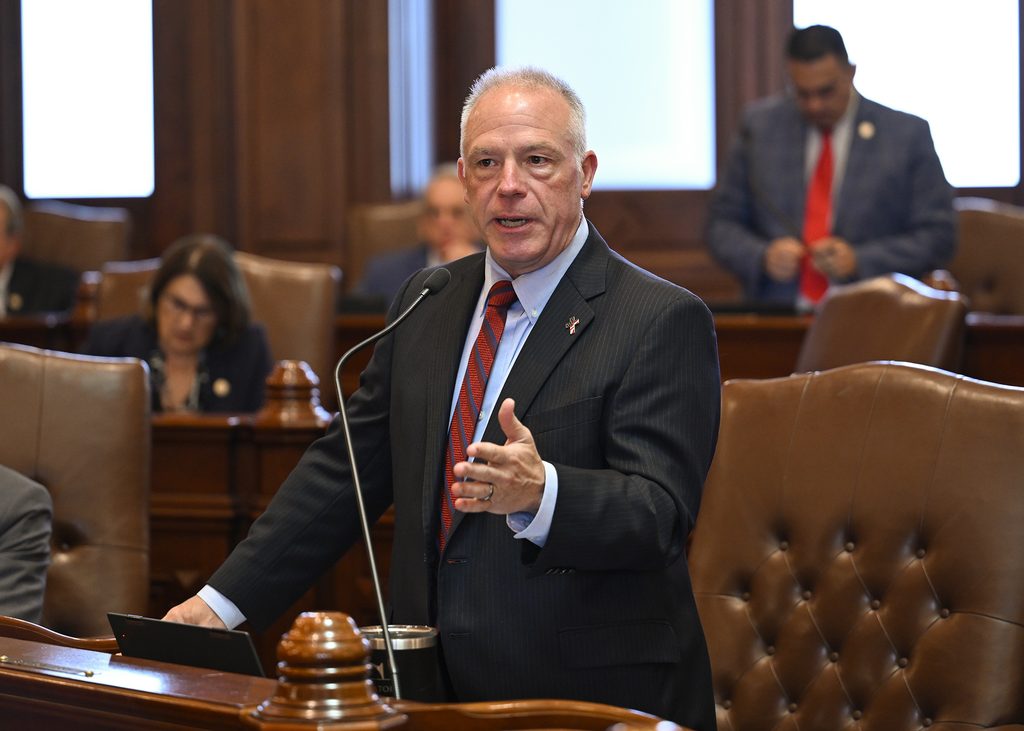
September 15 marked five years since Governor JB Pritzker signed the controversial Climate and Equitable Jobs Act (CEJA), which put Illinois on a state-mandated path to phase out fossil-fuel power generation.
In the years since its passage, I have raised concerns about whether Illinois is moving too quickly to take dependable generation offline without having enough replacement power ready to meet demand. Those concerns have grown as families and businesses face higher energy costs and Illinois moves closer to CEJA deadlines that will require additional generating units to either meet zero-emissions requirements or shut down completely.
Removing dependable generation from the grid threatens reliability, puts jobs at risk, and leaves families and businesses vulnerable to even higher energy costs.
To address those concerns, I am co-sponsoring several measures aimed at changing the state’s current course and placing a greater emphasis on affordability and reliability.
- Senate Bill 3970 and Senate Bill 3979, which require thorough studies and reviews of customer bill rate hikes before large-scale gas-to-electric transition projects are approved.
- Senate Bill 3929 saves customers hundreds of millions in rate reductions, which extends closure dates set in CEJA for power plants by 10 additional years.
- Senate Bill 4028, which modernizes outdated interconnection rules that contribute to project delays and inconsistent upgrade costs.
As Illinois families continue to feel pressure from rising energy costs, lawmakers should use the upcoming veto session to address growing concerns about affordability and reliability. With major CEJA deadlines drawing closer, the state cannot afford to wait until reliability problems become more severe or costs climb even higher.
Early Voting Underway in Illinois
Early voting for Illinois’ November 3 General Election began September 24, giving voters the opportunity to cast their ballots ahead of Election Day.
Early voting locations and hours vary by jurisdiction, so voters are encouraged to check with their local election authority before heading to the polls. Under state law, early voting in Illinois begins 40 days before Election Day and continues till the day before the General Election.
September 24 also marked the first day vote-by-mail ballots can be sent to voters who have requested them.
Illinois voters can find information about early voting locations, voter registration, vote-by-mail, and other election-related information through the Illinois State Board of Elections website.
Harvest Season Safety: Watch for Farm Equipment on the Roadways
With harvest season underway across Illinois, the Illinois State Police is reminding motorists and farmers to use extra caution as large farm equipment travels between fields.
Farm tractors and other equipment often move at much slower speeds than regular traffic and can take up more space on rural roadways. In 2024, the Illinois Department of Transportation reported 275 crashes involving farm tractors or equipment.
ISP is encouraging motorists to keep several safety tips in mind:
- Allow extra travel time and be patient
- Increase following distance to improve sight lines when driving behind wide, slow-moving vehicles.
- Reduce speed when encountering farm equipment on public roads.
- Flashing amber lights mean ‘caution’ and orange and red reflective triangles warn motorists that farm equipment travels at slower speeds.
- It is illegal to pass in a no passing lane or within 100 feet of an intersection, railroad crossing, or bridge. Improper passing, including farm equipment, can be deadly. Be cautious when pulling back into the lane of traffic.
- Watch for the farmer’s indication of a turn. Newer equipment may have turn signals, but older equipment may not, so watch for hand signals
- For wide equipment, be prepared to yield.
Farmers traveling between fields are also encouraged to:
- Avoid rush hours and busier roadways when possible.
- Avoid driving tractors on roadways during bad weather, low visibility, and when dark.
- Use reflective marking tape and reflectors at the extremities of equipment.
- Take time to wipe off reflectors, flashing lights, and any other warning devices on equipment before entering the roadway. Equipment covered with dust/mud/debris from the field can make warning devices difficult to see.
- Pay attention to traffic backing up behind you while traveling between fields and look for opportunities to ease it. If road and shoulder conditions are safe, pull over to the right to temporarily and allow traffic to pass, giving back-ups time to clear.